

Old Harbor is a small (population ~ 250 [depending on who you ask]), oceanside Alutiiq village on the Southeastern side of Kodiak Island. Established in 1971 under the Alaska Native Claims Settlement Act, it is rich in Indigenous culture with strong ties to the subsistence way of life, respect for elders within the community, kinship, and spiritual ties to the land. It is located approximately 40 miles from the town of Kodiak (as the bush plane flies), and not on the road system. Like many remote Alaskan villages, it has its own gravel airstrip (6R7) with daily flights from town to deliver groceries, medical supplies, and other items not available within the village. Although remote, the town does have water, electricity, internet, and phone service. It is one of Kodiak Island’s six native villages and is mostly inhabited by Alutiiq people.
The Alutiiq people take pride in their beautiful culture with Old Harbor having accomplished and respected artists. There is Native culture taught throughout the community including teaching the Aleutic language in school; and a Native dance group, the Nuniaq Alutiiq Dancers, that perform in both local and distant venues with goals of sharing and teaching their culture. As in Akhiok (see former posts), Aleutic week is also celebrated in Old Harbor. This annual celebration of Aleutic culture is practiced in all of the Indigenous villages on Kodiak Island and encompasses having students come from within and outside of the village to learn and practice cultural aspects of their unique Native group. Additionally, there is the Nuniaq cultural camp each summer on Sitkalidak Island just over the bay from the village of Old Harbor (see below for more history on this island).
Old Harbor’s culture is unique in that it encompasses older Alutiiq/Sugpiag traditions (the Alutiiq/Sugpiaq are Indigenous people, native to Alaska, that have lived in coastal regions of South-Central Alaska for over 7,500 years. Their traditional homelands encompass the coastal regions of the Kenai peninsula, the Kodiak Archipelago, the Alaska Peninsula and the Prince William Sound); teachings from Russian Orthodox Christianity; and significant influences on subsistence lifestyles filling their freezers with abundant fishes and wildlife to sustain them in winter months.
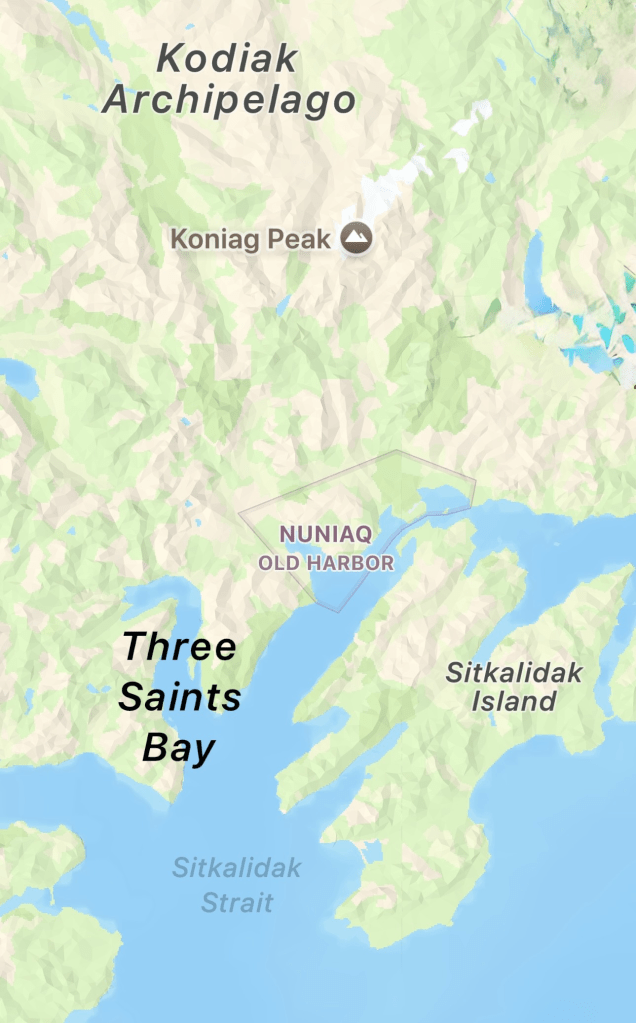
Its economy revolves around fishing, hunting, and some tourism related to the aforementioned as well as wilderness related activities. As shown in the map below, it is protected by the waters of the Sitkalidak Straight where there is abundant salmon, herring, cod and halibut that sport and commercial fishermen harvest as well as those within the region who live on a lifestyle of subsistence. Those families in the village that continue their traditions of subsistence not only fish for the above species, but also kelp, shellfish, sea gull eggs, sea urchins, crab and octopus. Hunting for ducks, puffins, Kodiak brown bear, mountain goats, deer, seal, ptarmigan, and sea lion are also central to this lifestyle. Additional wildlife within this region also includes gray whales, humpbacks and orcas that migrate through seasonally following their food sources.
Old Harbor History
The Old Harbor community has origins in the time of the Russian conquest where Russian explorers came to conquer and impose their lifestyle and culture on the Indigenous peoples of this village (and all of Kodiak Island and the Kodiak Archipelago). In 1775, Grigory Shelikhov – a Russian seafarer, merchant and fur trader – began his organized merchant ship voyages to the Kuril (near Russia’s coast) and Aleutian Islands for fur trading, eventually leading the expedition to the coastal mainland shores of Alaska where he would eventually establish permanent settlements that were the first Russian settlements in North America.
In April 1784, Shelikhov reached Three Saints Bay on Kodiak Island where the Native tribe of Koniaga, an Alutiiq nation of Alaska natives, attempted to defend themselves from the Russians. However, Shelikhov – with his forces armed with cannons and guns – took many hundred hostages and established his authority on Kodiak Island, and founded the first Russian settlement in Alaska on the islands in Three Saints Bay. (Note: Unalaska was established years prior, but not considered a permanent Russian base until Shelikhov’s time). Like most Native American tribes, the people of this region were subjected to unimaginable horror and violence with the most known event, the Awa’uq Massacre, taking place on Sitkalidak Island. It was here that in the summer of 1784, Shelikhov along with another 130 Russian fur traders ravaged and brutally murdered several hundred Alutiiq men, women and children from the Qik’rtarmiut Sugpiat tribe (an Alutiiq tribe) at Refuge Rock (a small island off of the eastern coast of Sitkalidak Island). Afterwards, in Alutiiq, this sacred place is known as Awa’uq (“to become numb”).
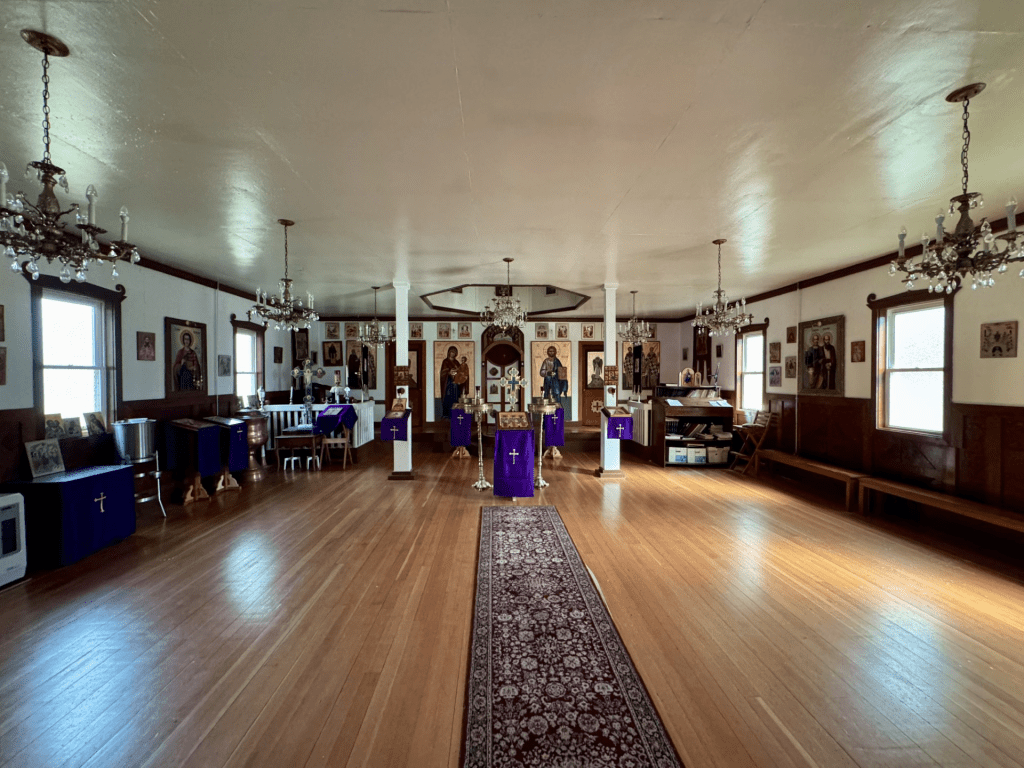
In contrast to the above, the community of Old Harbor has also been a refuge for those from other villages with smallpox survivors in the early 1800’s joining the village, and Aiaktalik and Eagle Harbor residents resettling here as well. Similarly, after the tsunamis associated with the earthquake of 1964 (the Great Alaska Earthquake) devastated the area, Old Harbor residents were forced to relocate within the area to rebuild their homes and lives. The only structure left after the aforementioned earthquake was the Russian Orthodox church that still stands today.

Above and below are current day images of the Russian Orthodox Church in Old Harbor. I took these in March 2025 and am impressed at the preservation of the structure inside and out.
And now time to shift gears to my favorite parts – the fish and wildlife!
Wildlife Corner
The Stellar Sea Lion (Eumetopias jubatus) – in the Aleut language they are called qawax; in Alutii, wiinaq; in Central Yup’ik, uginaq; & in Siberian Yup’ik, ulgaq.
The Steller or Northern Sea Lion is in the family, Otariidae – meaning the “eared seals” – and encompasses all fur seals and sea lions. They differ from the “true seals” in that they have long forearms (flippers) used for locomotion (propulsion) in the water, and rotating hind flippers enabling quadrupedal movements while on land. Steller sea lions are apt climbers and can be found in higher elevations including cliffs over the water. They have muscular necks with prominent foreheads and a range of sounds from lower pitched roaring sounds to higher pitched, “lamb-like” vocalizations characteristic of younger pups.
Sea Lions live up to 20-30 years with males living longer and reaching sexual maturity at 3-7 years of age. Females start breeding at 3-7 years old and will spend the next 2 decades of their lives being pregnant or lactating (YIKES!). Although males reach sexual maturity at the same age as the females, the males won’t hold breeding rookery territories until they reach 9-13 years of age. Females breed in the summer (June) with fertilization delayed until the fall (October) and single pups born the following June. The pups nurse or “suckle” until approximately 1-3 years of age, with the majority weaning after their first winter.
As in many species, the males are larger than the females with adult males weighing almost twice as much as their female counterparts. Males grow to approximately 1,200 pounds and almost 11 feet long, and females reach just under 600 pounds and almost 9 feet in length. The males with reach max growth at 5-6 years while males grow until their 12th year.
Stellar Sea Lions are marine predators with a broad range of dietary fish and cephalopods (octopus and squid) and can consume prey whole while underwater. Common fish in their diet include walleye Pollock, Atka mackerel, Arrowtooth flounder, Pacific herring, Pacific cod, capelin (smelt), eulachon (Candlefish), rockfish, and flatfish.
Below are Stellar Sea Lions in Sitkalidak Straight near Old Harbor. They were following the herring spawning and fed for two days before leaving to follow the food. This raft of sea lions were so fun to watch leaping from the water and bobbing their heads up and down enjoying the roe and just being sea lions.
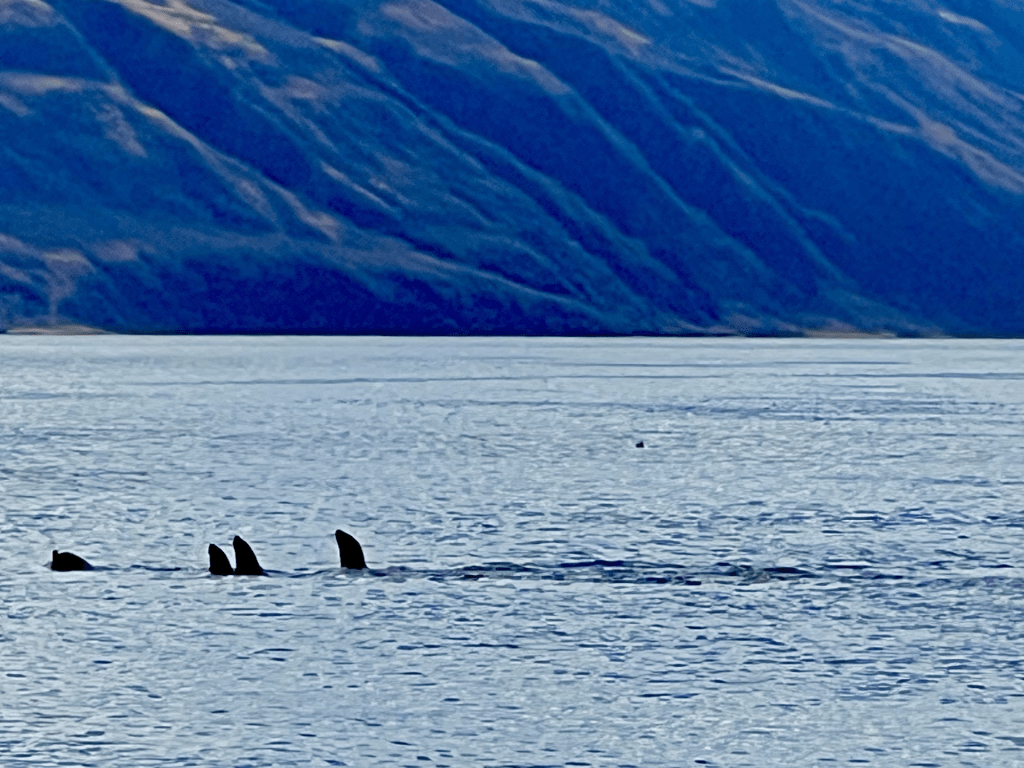

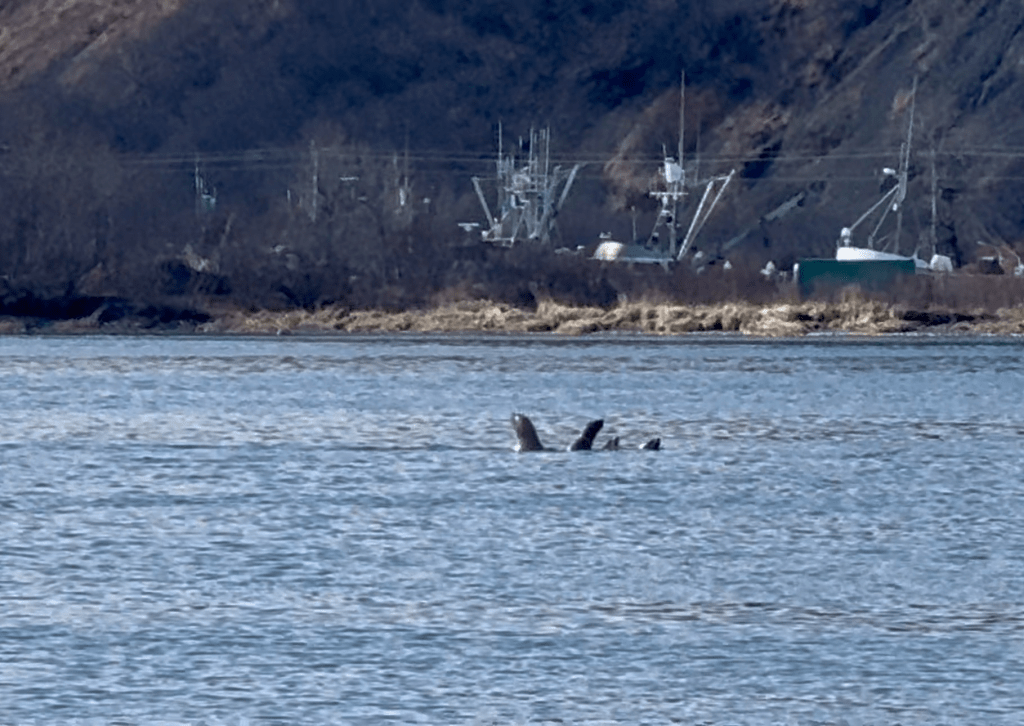
While sea lions do not migrate, they do relocate their “haul outs”. Hauling out is a unique behavior of pinnipeds (true seals, fur seals, sea lions and walruses) where they leave the water for a small area of land where they concentrate between foraging activities. They “haul out” onto sea ice or land to rest and reproduce between hunting. Their haul out locations shift based on seasonal concentrations of prey and/or to be more protected during breeding, nursing and rest periods. In the North Pacific rim, there are over 300 haul outs with females exhibiting site fidelity where they utilize the same rookeries annually for breeding and pup raising. These sites are often remote where predators (Orcas, sharks) are sparser, and the sea lions have increased protection.
Pacific Herring (Clupea pallasii)

Although not too evident in the above picture, herring have silvery flanks with a bluish-green upper body (which distinguish them from other silver fishes of similar size) and no other distinct features markings. Their body habitus is compressed laterally with serrated scale arrangement along their undersides. They have no adipose fins, a deeply forked tail, and can grow to 18″ in length.
They are sexually mature at 3-4 years of age, with annual spawning after reaching the age of maturity. Herring spawn in the spring in intertidal and subtidal zones where there are shallow waters and vegetation.
Female Pacific herring migrate from deeper waters to more protected, shallow habitats closer to shore. During this time, they are at their peak maturity, releasing roe while the males release their milt into the water to fertilize it creating beautiful turquoise colors in the waters and sweet photo opportunities of the ocean and the wildlife feeding on the roe. Bald Eagles have been soaring overhead all day dining on the roe. Various other wildlife, including sea lions and seals, are also taking advantage of this spawning event – there were even orca whales spotted in these waters early this morning. I missed that. Next time.
Once fertilized for approximately 2 weeks, the herring eggs and the larvae swim and drift within the currents where they eventually morph into juveniles in ocean inlets and protected bays. In autumn, they transition to deeper waters where they will remain for another 2-3 years. Herring juveniles remain apart from their adult counterparts until they reach maturity then travel in large schools. They remain in offshore waters to feed until they return to inshore waters to spawn. Herring remain near the ocean bottom during daylight hours, occupying the water column to approximately 1,300 feet, while ascending to surface waters for nighttime feeding – this pattern of migration is known as diel vertical migration and is typical of many other ocean organisms in addition to herring.
Pacific herring occupy coastal waters of the Pacific from Kamchatka to the Bering Sea; the Okhotsk Sea; waters near Hokkaido, Japan and southeast into the Yellow Sea. More east, they are found near Baja, California north to the Beauford Sea. The Russian Arctic from the White Sea to the Chukchi Sea also are home to the Pacific herring.
In Alaska, the Pacific herring stocks have trended upward since the early 1980s due to management aimed at long-term sustainability. Regrettably, in 1993, the population in the Prince William Sound collapsed as a result of the Exxon Valdez oil spill and to this day has shown little signs of recovery.

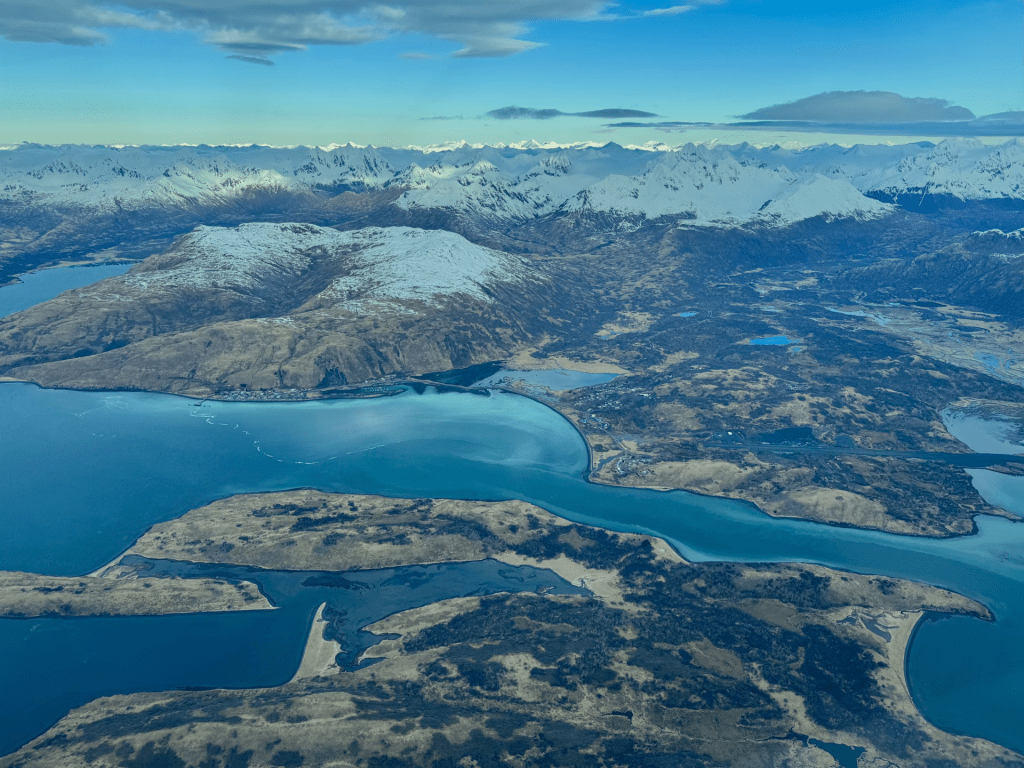
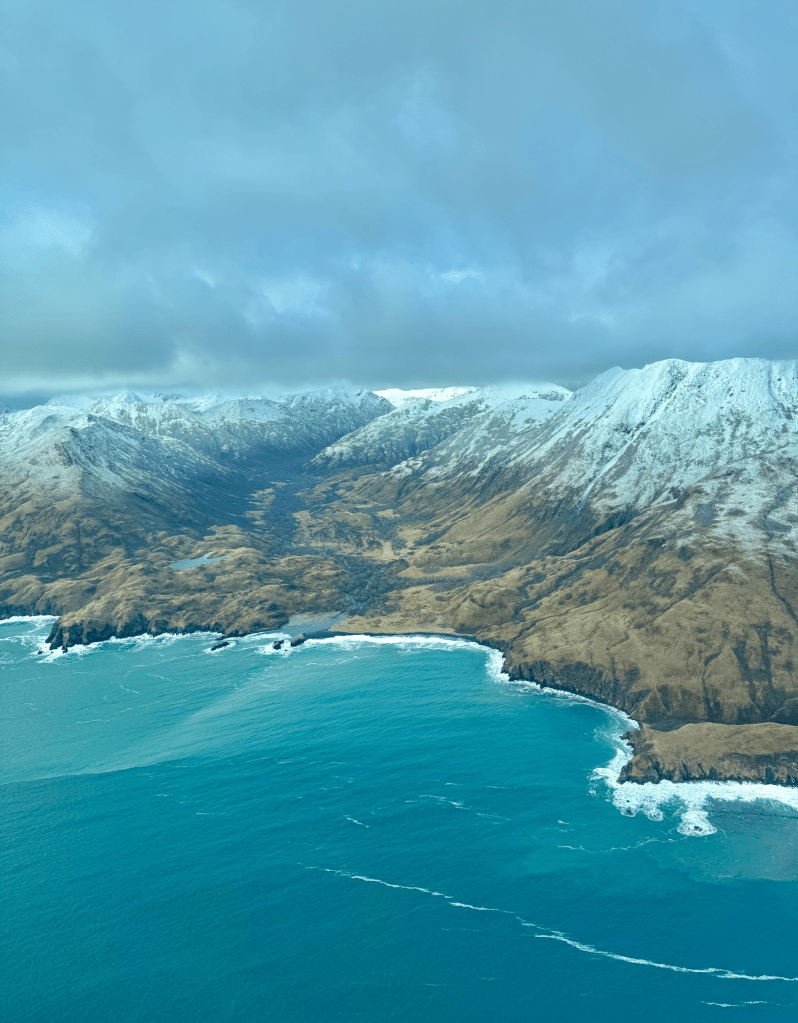
Above you can see the turquoise colors in shallow areas from herring spawning and the milt released for egg fertilization. Took these in 3/2025 just outside of Old Harbor.
*********************************
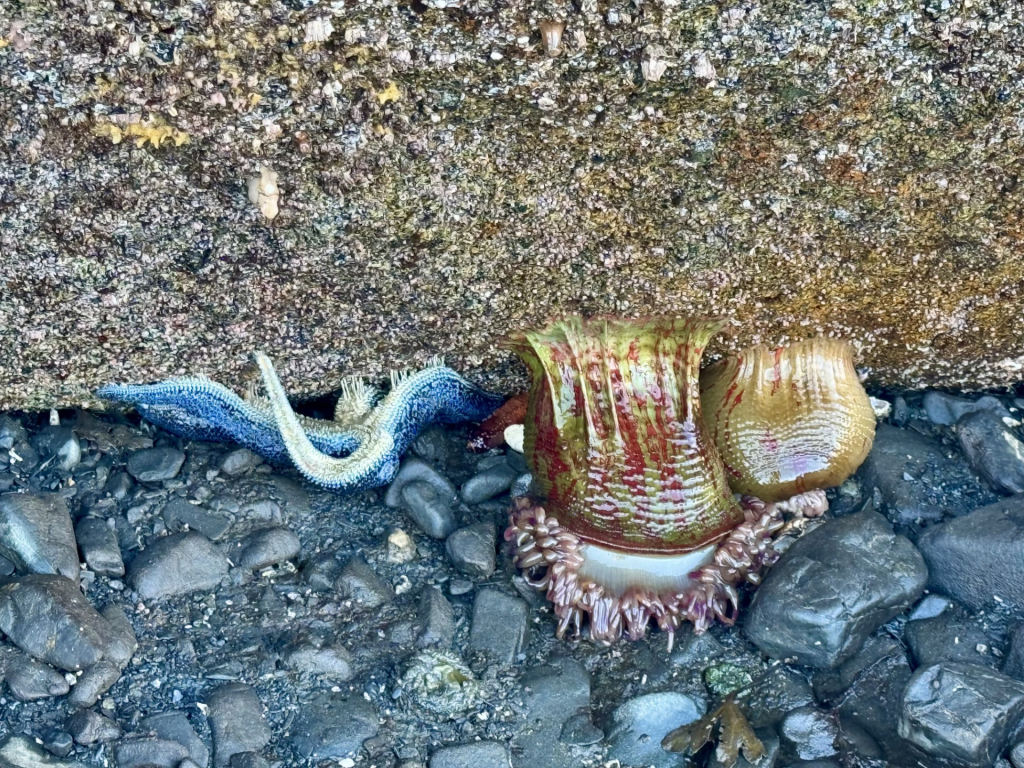
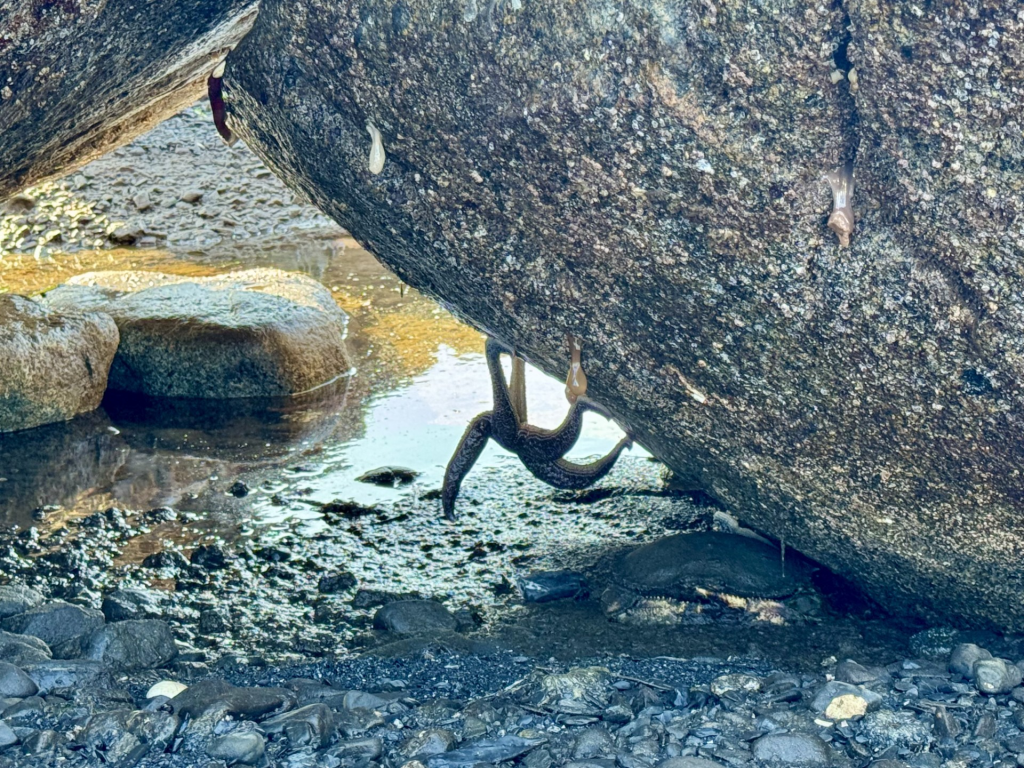
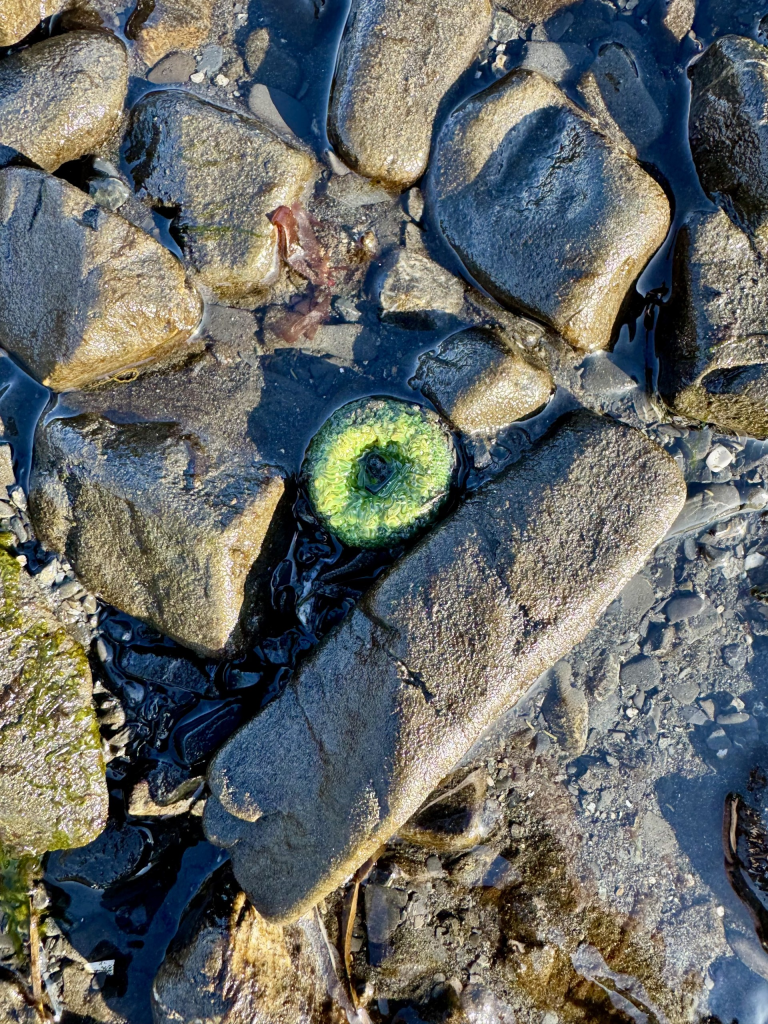
Below are other random pics from around the coastline of Old Harbor – marine invertebrates including starfish, anemone and a rather HUGE lurking Dungeness crab!
 jensnorthernexposure.com
Leave a comment