The school here is really neat. One small building for grades K through 12 with two very nice teachers – a couple, originally from Mississippi, who have lived here for the past 4 years and are clearly a wonderful asset to this community! There are also 2 aspiring teachers here – one a local Native girl who is a recent graduate of the high school, and another all the way from upstate New York here temporarily for training.
The students are divided into 2 groups – grade school and high school, and they all seem to have camaraderie between them and are very kind and supportive to one another.
The thing that impressed me the most about the school is the emphasis on the Native culture and the arts. I recall my school days as having classes that I was not all that interested in, and no sense of togetherness to the level that I witnessed here. This is likely due, in part, to the small size of the village, along with its isolation from many outside influences that make growing up in more populated, main-stream regions difficult with the usual challenges most of us faced.
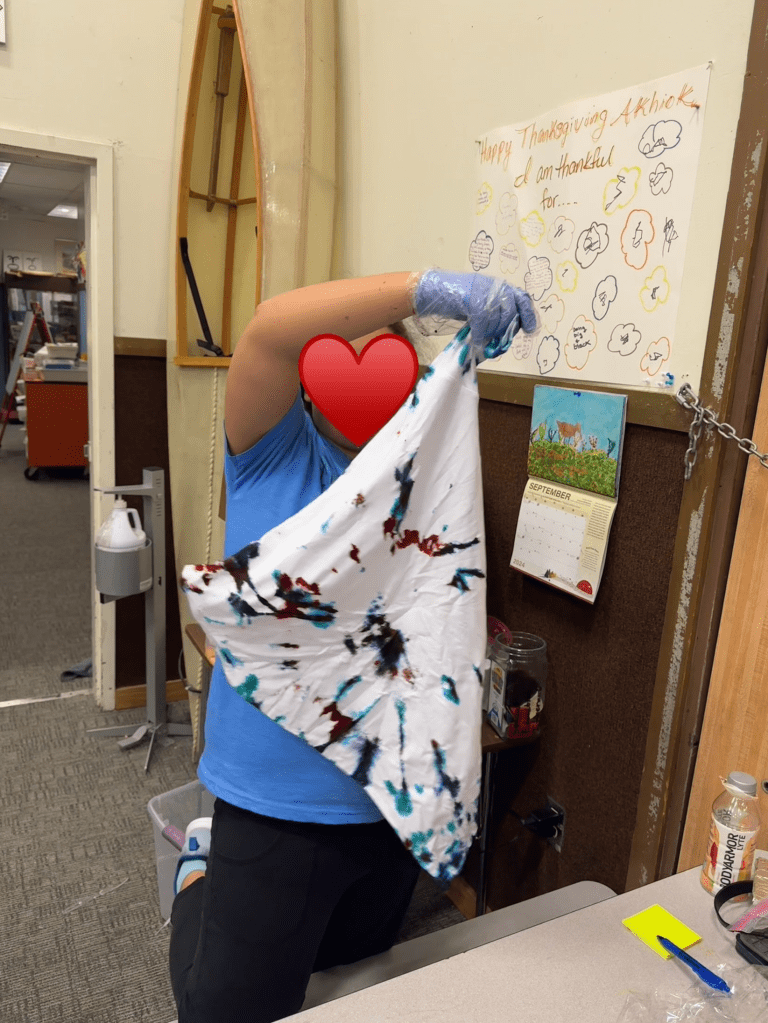
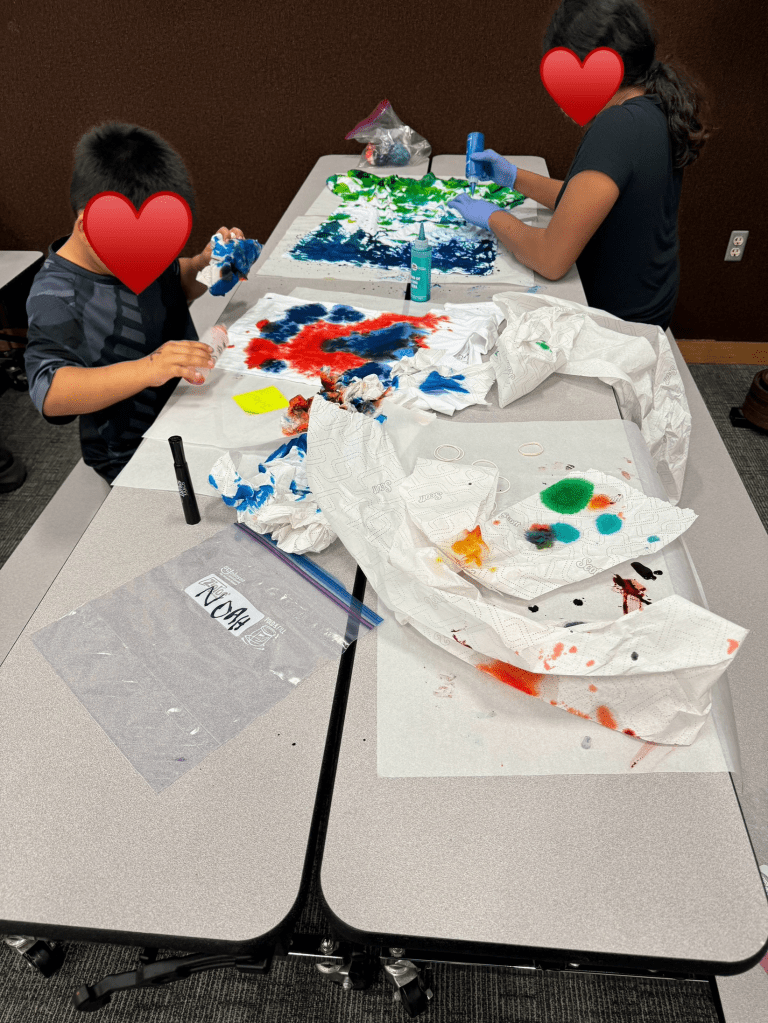
In line with the heavy emphasis on art and culture, the children were working on tie dying shirts and perfecting their native dance performances. They will dance later in the month in a community performance near Anchorage while the 2024 Alaska Federation of Natives Convention goes on. The theme of the convention this year is “Our Children – Our Future Ancestors”. This convention, held annually, serves as a voice for the Alaska native communities to address issues in government and policies that shapes critical native issues statewide. The gathering consists of thousands of people including official representatives, participants and delegates from tribes across the state where the discussions regarding the unique challenges and opportunities for the native communities can be heard. There are keynote speakers, reports from political leaders and expert panels, and stories shared of native experiences, strengths, knowledge, resilience and hope for the future. Annual priorities for the native communities are also established.
During the convention, various dance groups perform at Quyana (meaning “thank you” in Yup’ik). This is a cultural celebration aimed at the restoration and preservation of traditional native dances to ensure their passage to future generations. It is held over 2 evenings and highlights various Native groups from across the state. There have been over 200 dance groups to perform during this cultural revival. Both native traditional music and dances have remained central to native culture, and this was evident at the local Akhiok school when I visited.
Quyana serves to connect people from various villages and from different tribal backgrounds resulting in the sustainment and preservation of cultural histories across Alaskan Natives. It is the highlight of the convention, and the convention is the largest representative annual gathering in the United States of native people.


Preparations in the gym at the Akhiok school for their dance performance. The regalia is beautiful and impressive to see! The flow and movements of the materials used with ornate decorations along with the pounding of the drums and singing of the children actually brought me to tears and gave me goosebumps! It is quite moving even in a setting where they were just practicing for the big event.
I feel so honored to be invited to come and watch given I am an outsider and only in the village a short time. This feeling parallels the feelings I have providing medical services here – what an honor to be allowed to come into such a special place and witness first-hand a culture usually only available to most via a book or other media.
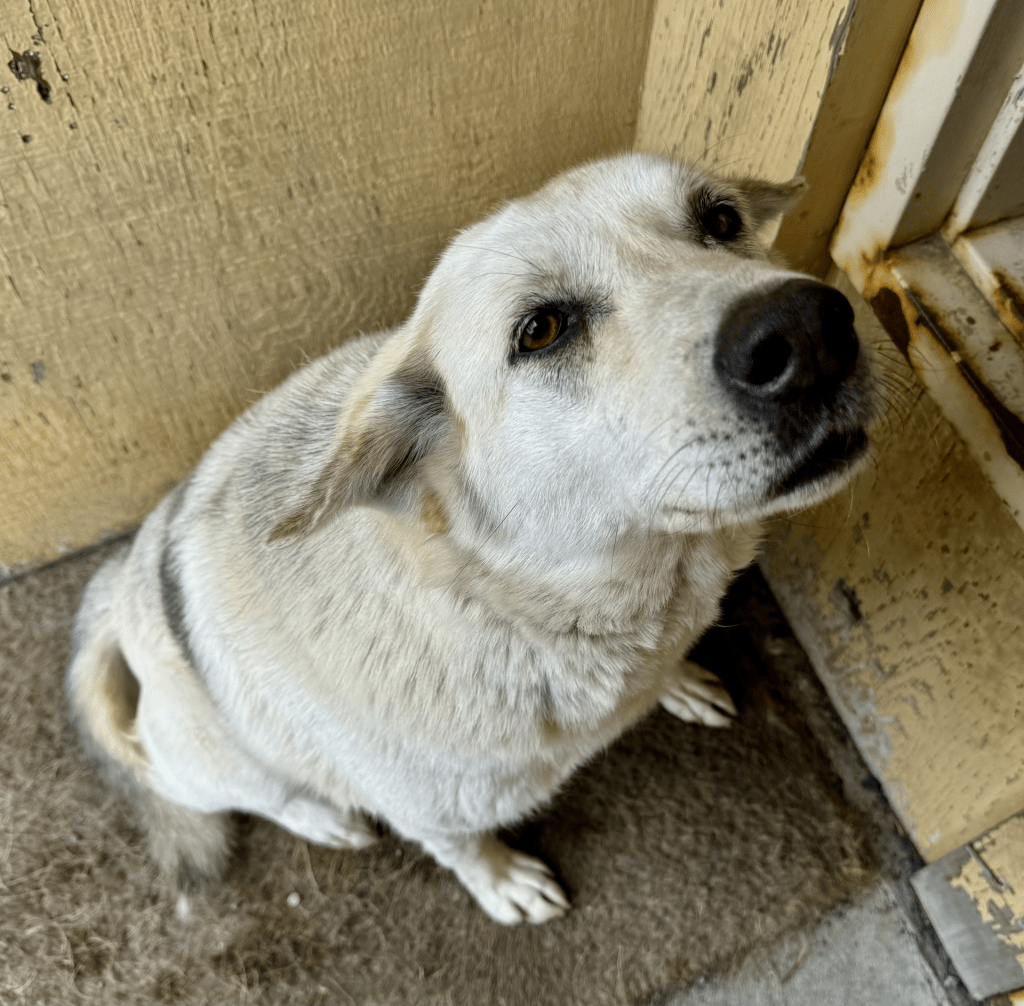
The School Greeter below, who remained perched on the porch & welcoming, was sweet and docile.
Native Culture & a Life of Subsistence
Alaskan Natives live a life of subsistence that this is critical to their cultural and spiritual practices today as it has been for many years. Today, as in former generations, Alaska Natives live off the ecosystems that surround them – it is not confined to the land but also reaches into the surrounding waters and skies encompassing many of the earth’s creatures that live therein. It is a life of living off of the land and waters, relying on fish, plants and wildlife for food, clothing, tools, shelter, handicrafts and transportation. Without it, life for these incredible cultures and self-sufficient people would be impossible.
From a historical standpoint, when the Europeans initially came to Alaska, all of the Indigenous people encountered were engaged in a lifestyle of subsistence. As populations expanded and shifted in territorial times, new difficult and conflicting demands were imposed on Alaska’s cultural and natural resources including mammal and marine harvesting; commercial fishing and aquaculture; agricultural practices; mining; and the establishment of cities, towns and military installations, all of which impacted and still shape subsistence patterns.
Living off the waters and land are ancient traditions for all Alaskan Natives, and the minimization of the diminishment of subsistence patterns must be balanced with current, modern-day agendas and practices. The knowledge of hunting and fishing has been passed down from one generation to the next over thousands of years and revolves around an understanding of weather pattern awareness; animal behavior; and skills honed at harvesting both plants and animal life.
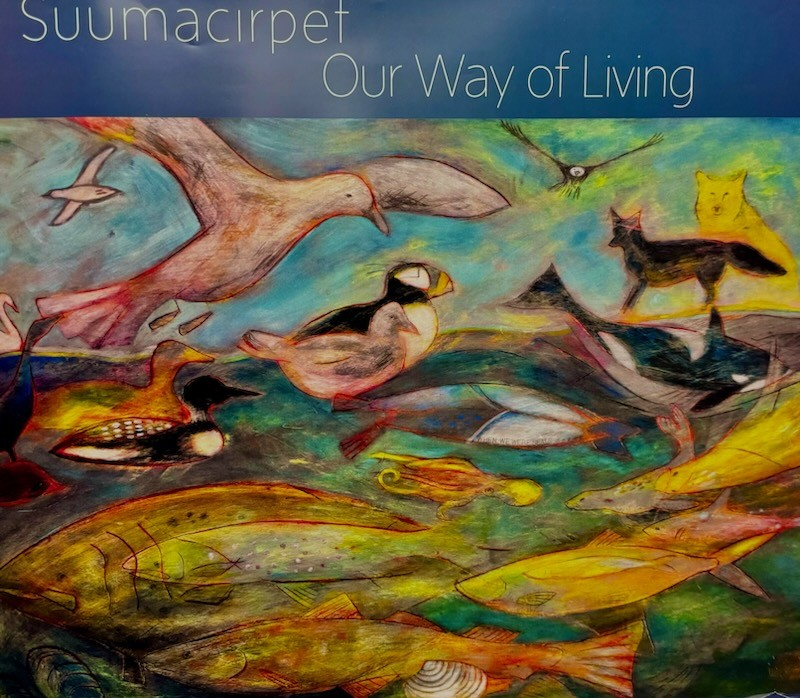
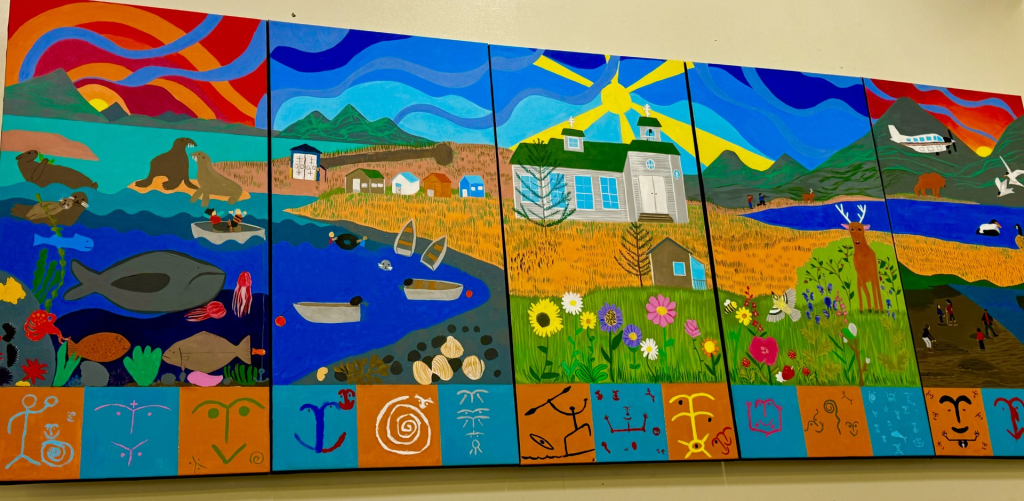
Here is a pic of a poster hung in the main hallway of the school that embodies the belief systems of subsistence on the natural resources described above. Suumacirpet means “our way of living”. The artist who painted this is Lena Amason.
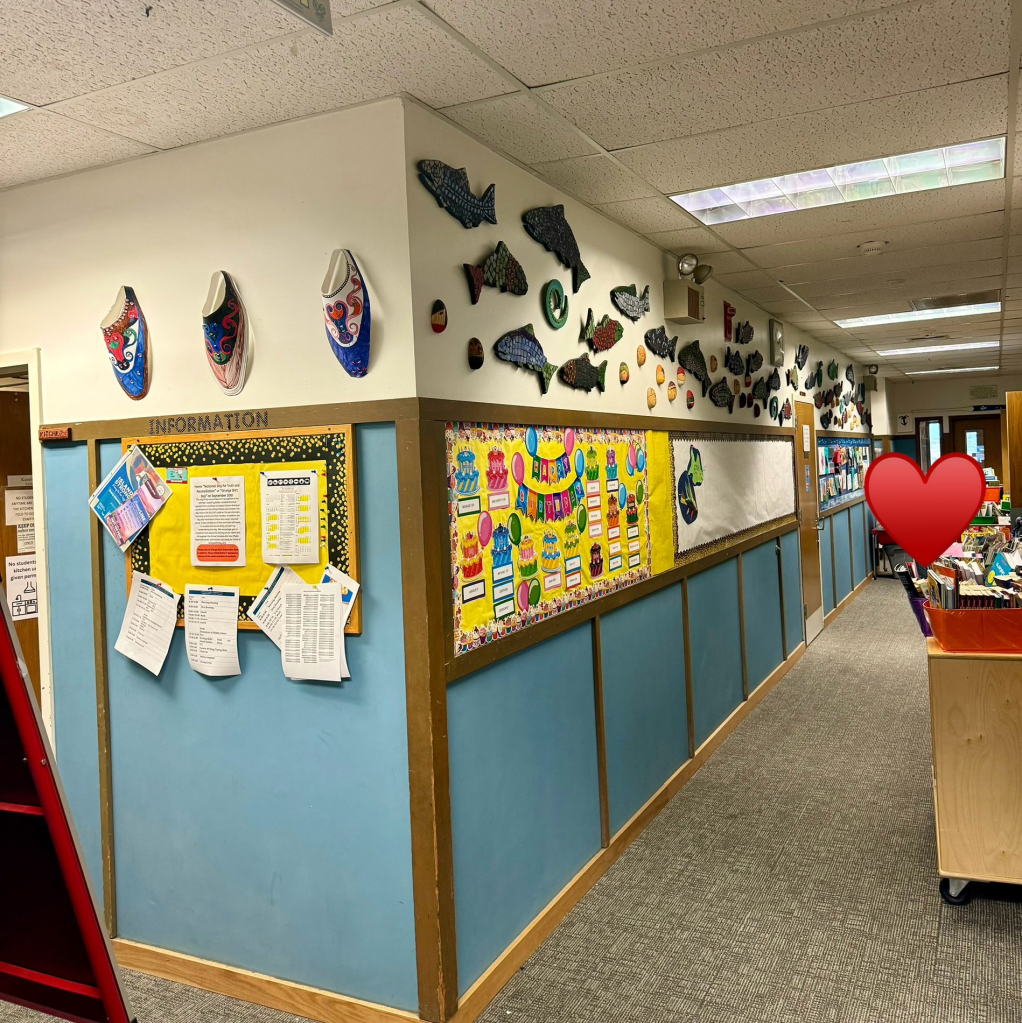
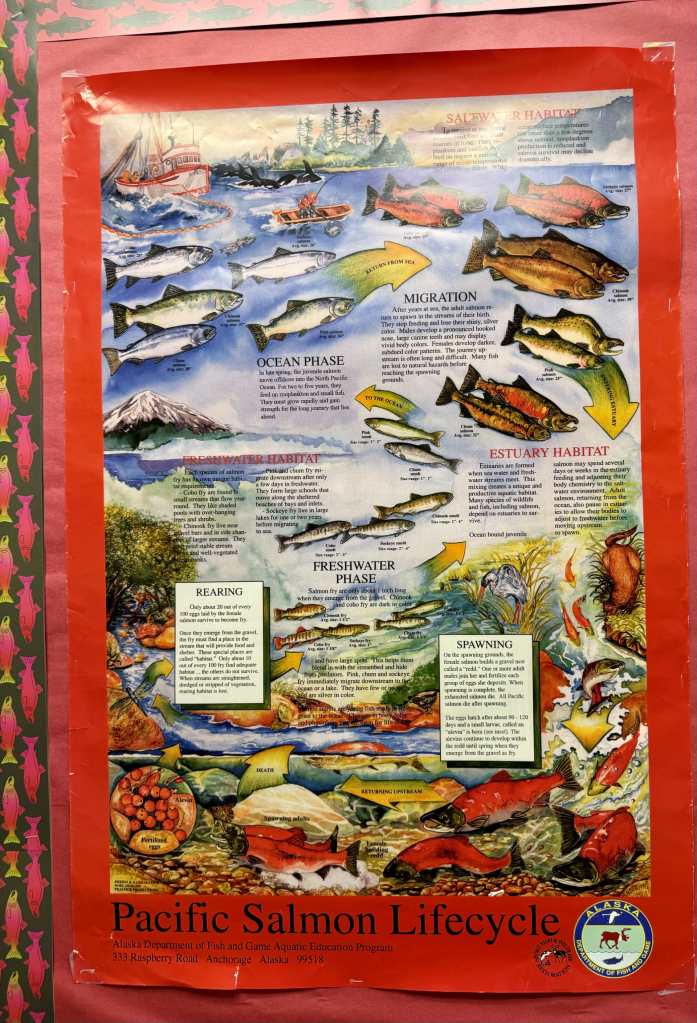
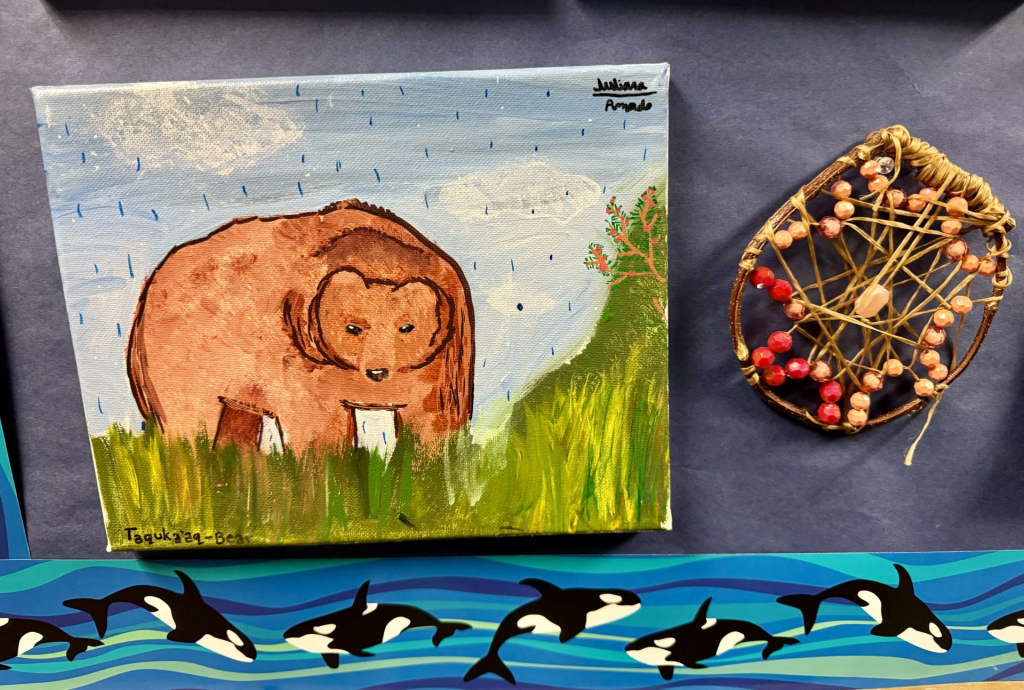
Below is some of the art displayed at the Akhiok school.



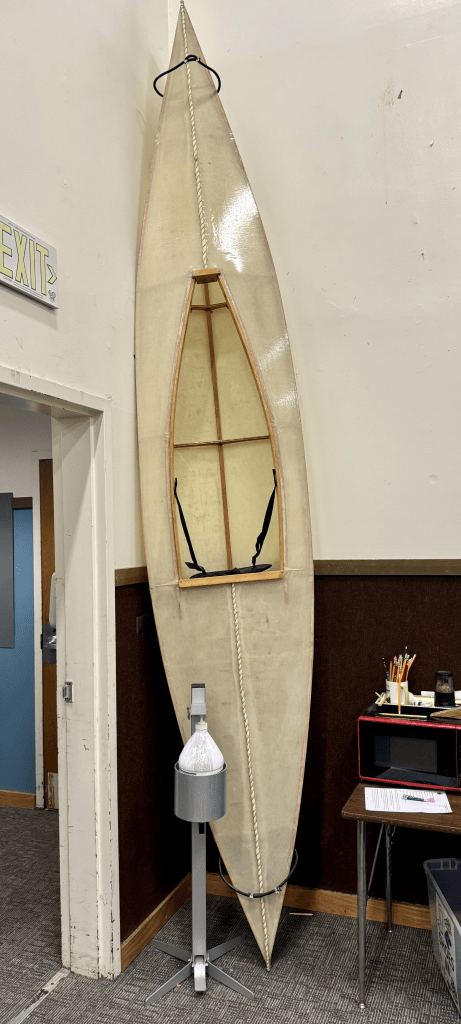
Really cool boat students made some time ago
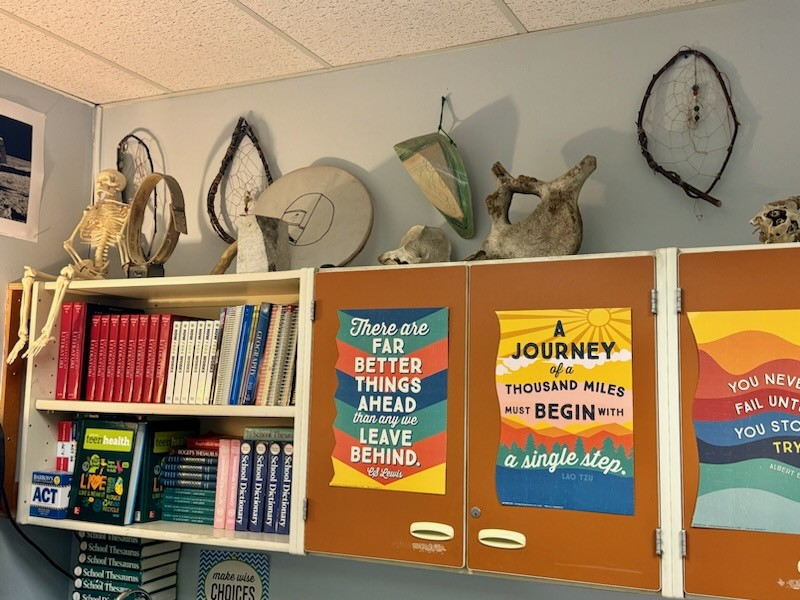

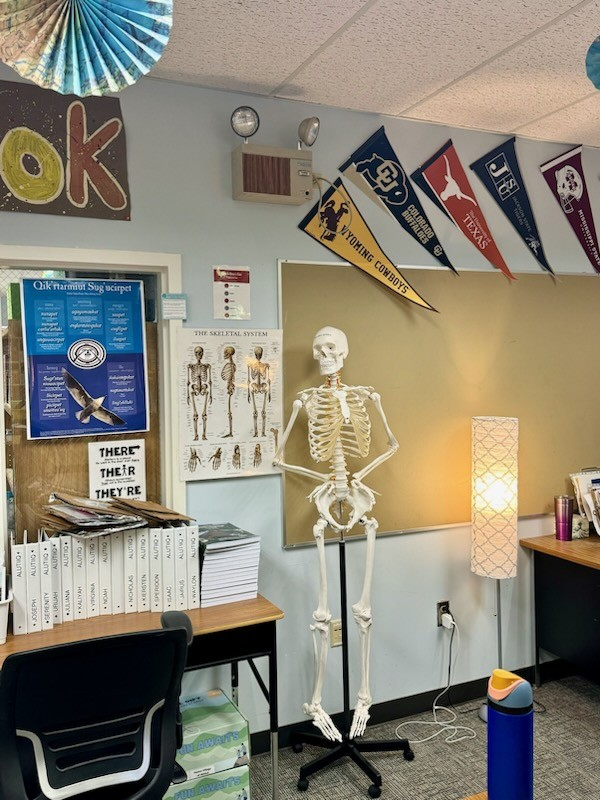
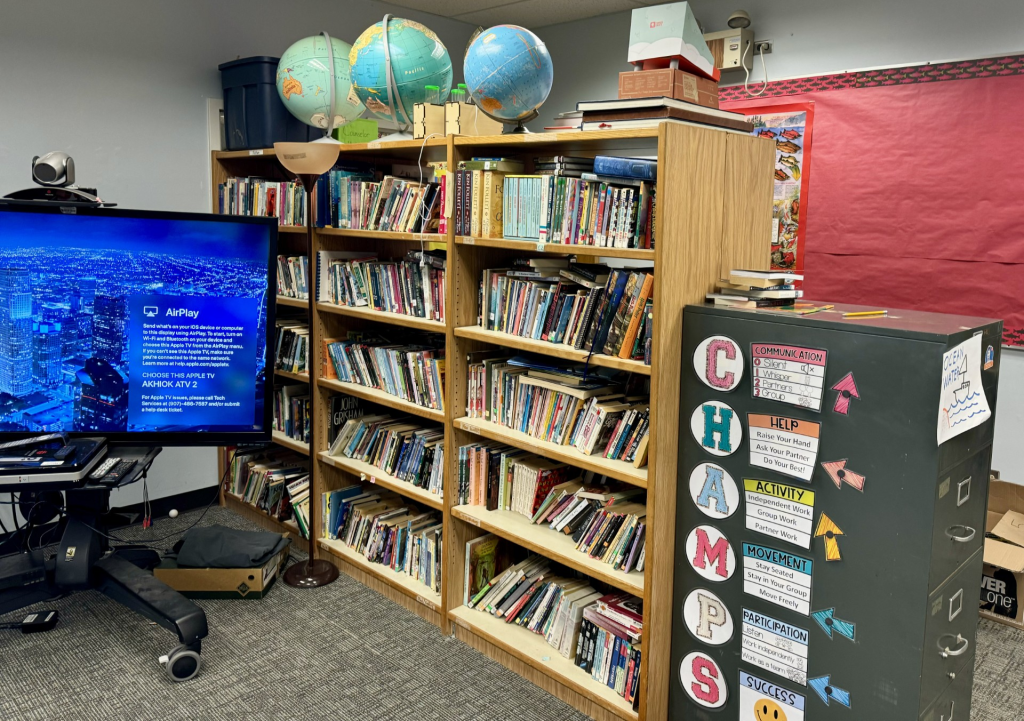
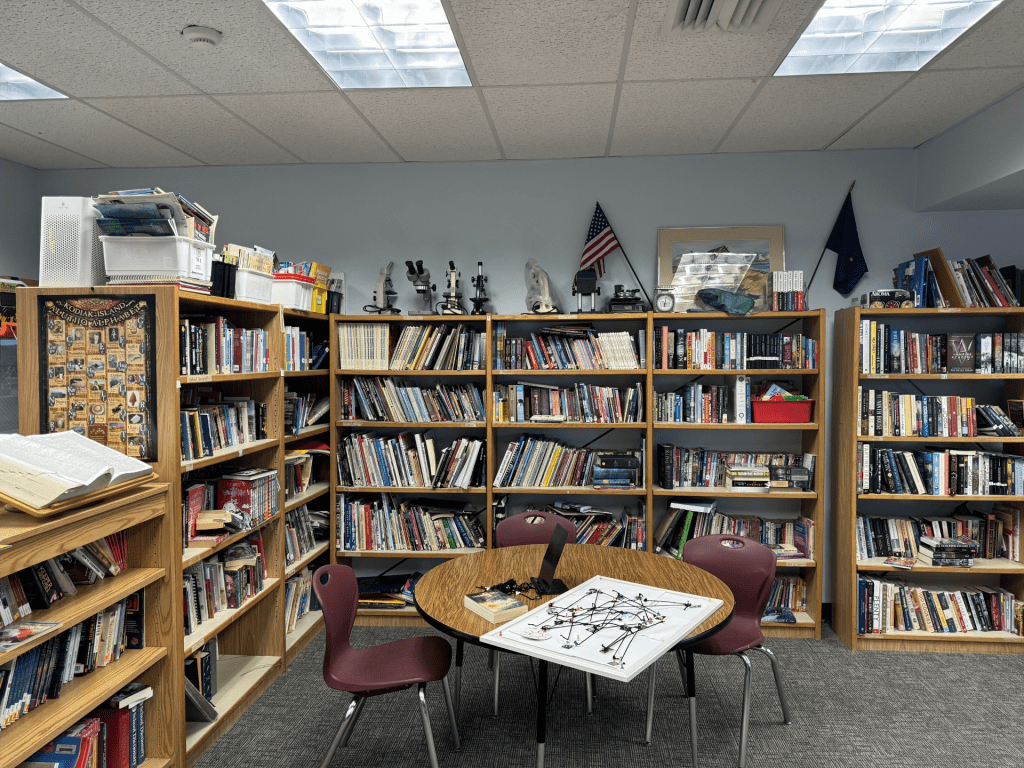
They even have microscopes!
Tie-dying in art class

Below, a poster in the gym/lunchroom with student messages of what they are thankful for – some are quite heart-warming mentioning being thankful for a roof over their head, living in a friendly community, and for their families.


 jensnorthernexposure.com
Leave a comment