
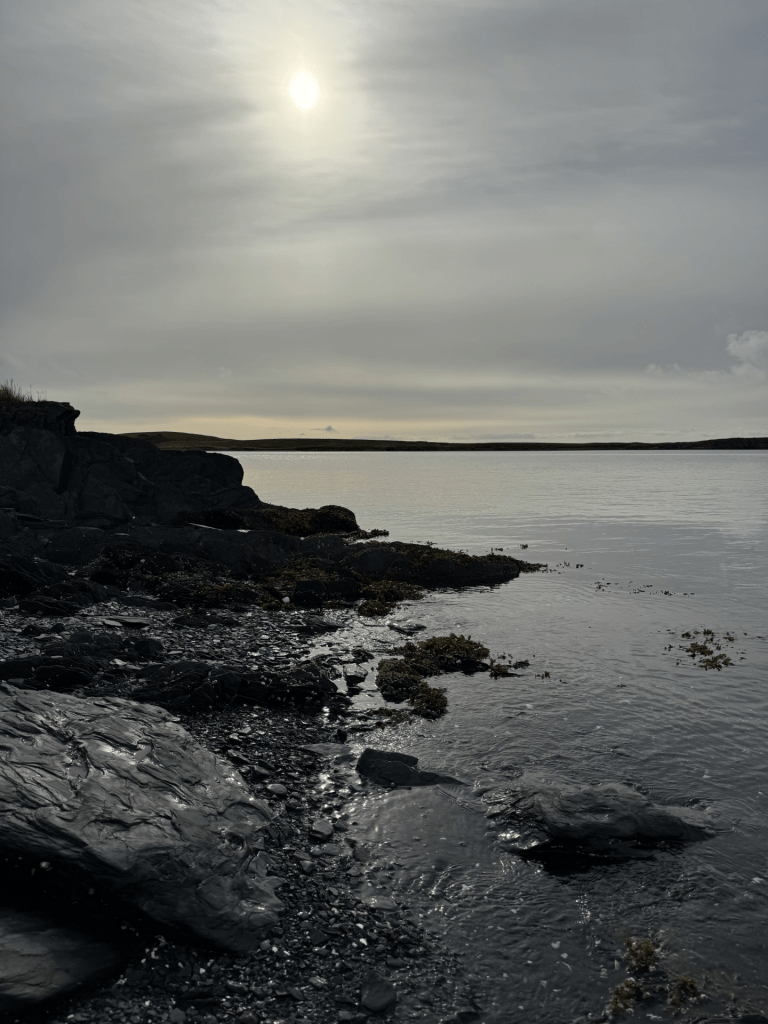
Wild winds and sleet yesterday gave way to a beautiful morning here on the island. The air a nice 44 degrees, gentle breeze from the ocean, and cool beach finds. Also got to see one of my favorite Alaskan birds, the ptarmigan.

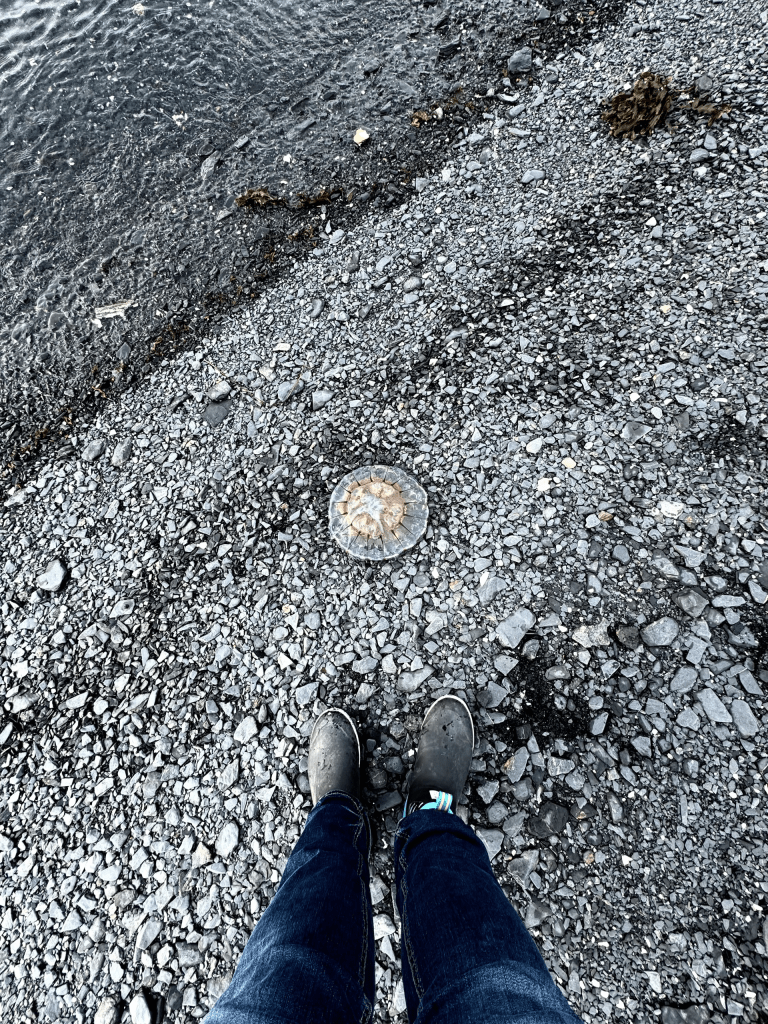
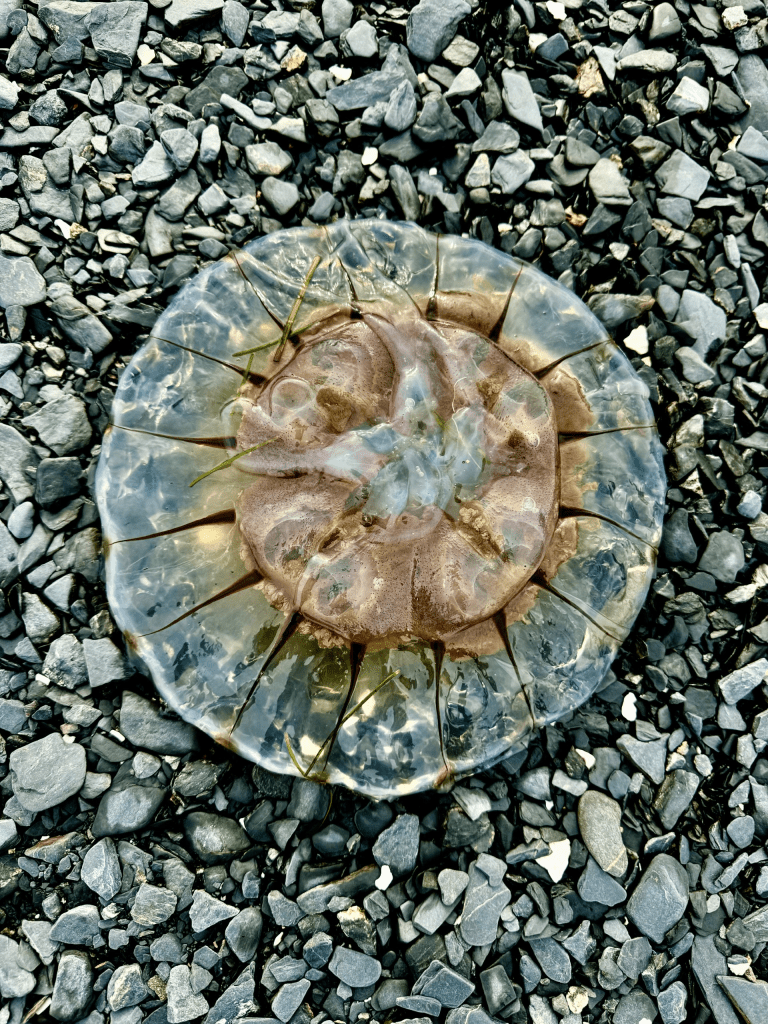
Moon jellyfish (Aurelia aurita) are known to wash ashore after storms. That fits given the wild one here Friday night and into yesterday. Up to 16″ in diameter with translucent bell shaped bodies, these have a fringe of stinging tentacles lying beneath. The only other jellyfish species in the Kodiak region are Lion’s Mane jelly fish which can grow to 8 FEET in diameter (!!!!!) and have shaggy tentacles reminiscent of a lion’s mane. They are known to be trouble for fishermen as they can foul their gear. None pictured here, but if I see one, will sure post it.


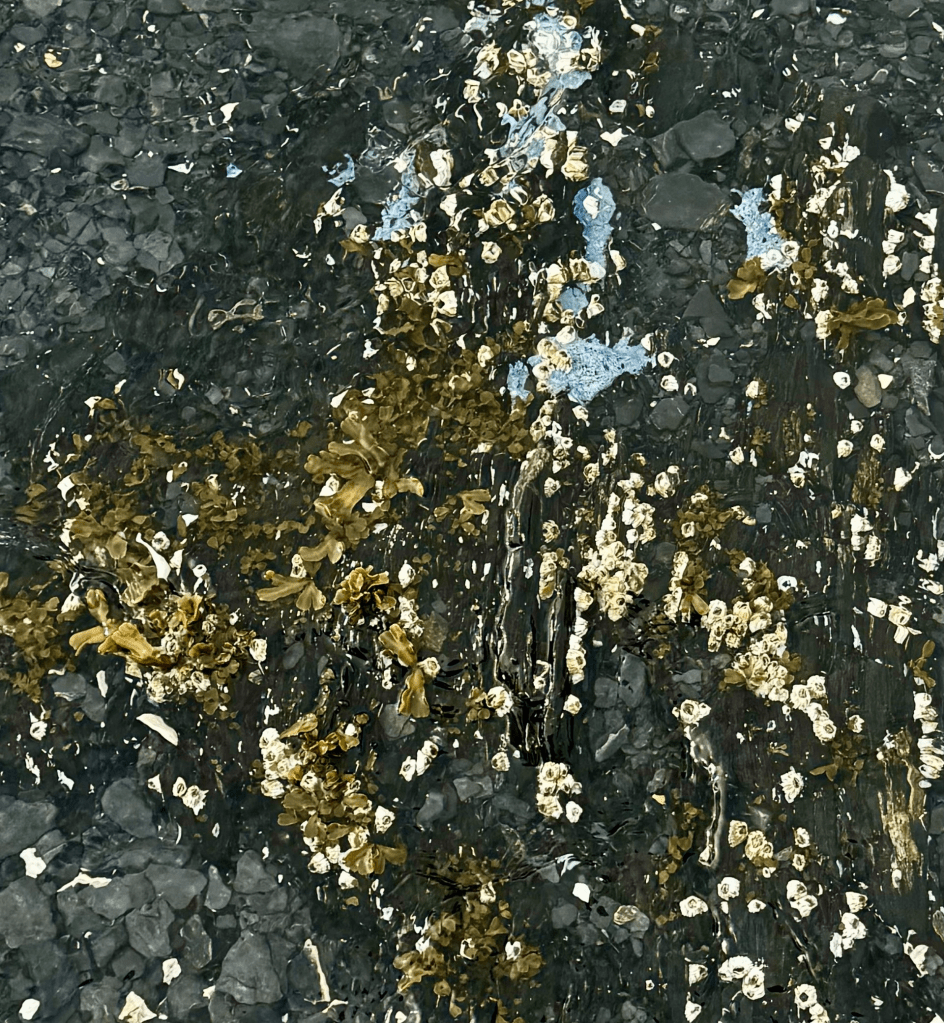
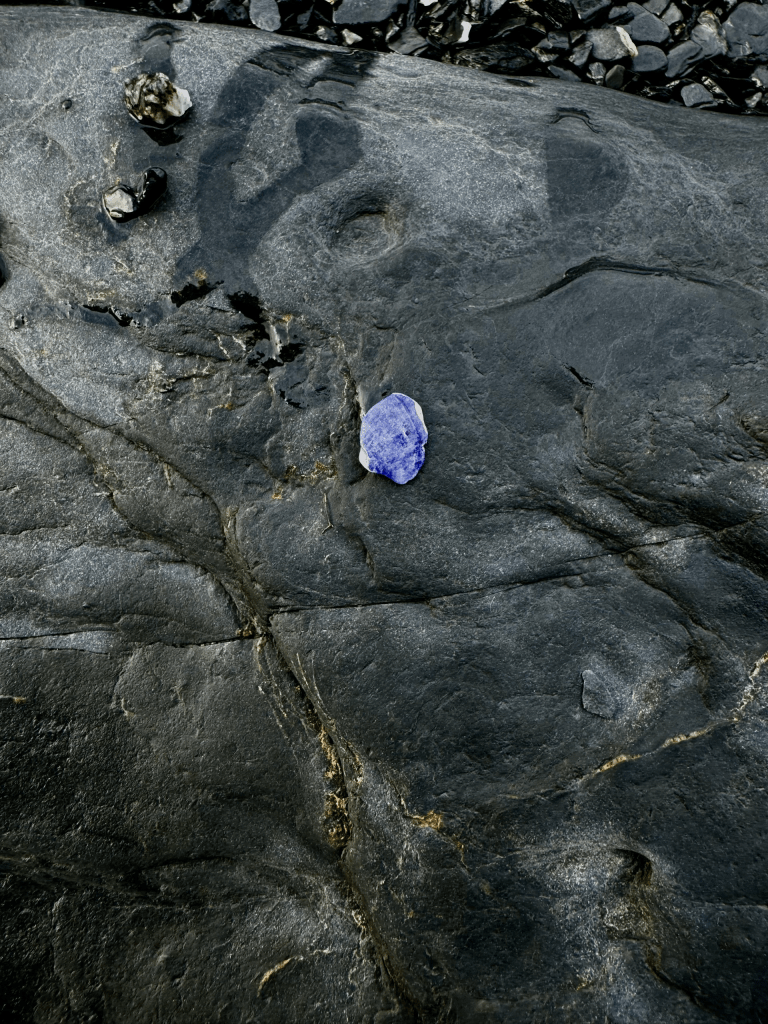
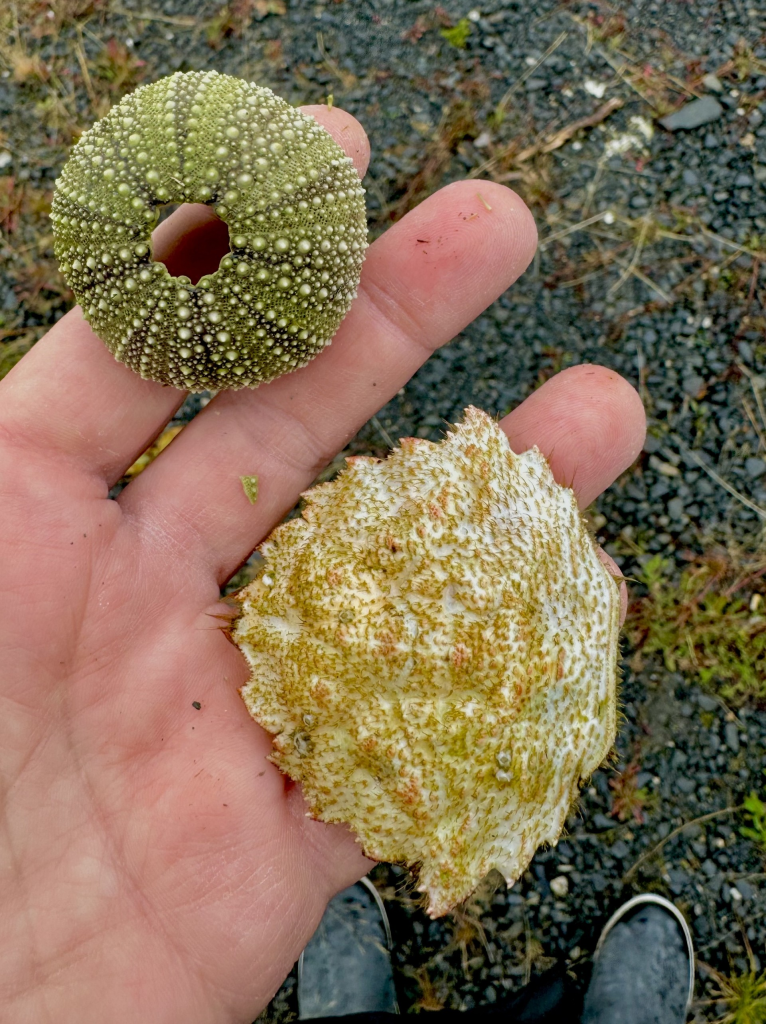
Green sea urchin (Strongylocentrotus droebachiensis) skeleton and Red crab (Cancer productus). Contrary to its name, the Red crab can come in various colors when they are young but all ages of this crab are characterized by their fan-shaped shells. They are rather small, reaching only 6″ in diameter.
Now onto the Green Sea Urchin. These are way cool and the skeletons remarkably fragile. The Green Sea Urchin can measure up to 9cm/3.6″ in diameter with average ones being around 2″. Green and Red Sea Urchins are the only commercially harvested sea urchins in Alaska and are harvested for their eggs which are considered a delicacy. It is common for the Green Urchin to be harvested by divers around Kodiak Island. These are not only found in Alaska, but throughout the Pacific from AK to WA.
These little ones like tide pools and rocky shores up to 3,770 feet (!!!) but are common at depths of 30 ft.
Thay have male and female individuals and utilize temperatures and daylight to synchronize gamete release during spawning in open waters.
They live on a diet of kelp and algae and are occasionally scavengers of other invertebrates and fish. They use radially configured teeth to tear and scrape for their food. Their predators include wolf eels, sea stars, sea otters, crabs and other fish.
Their hard bodies/shells are called tests, and in addition to these, they have 3 structures extending from this – their spines, tube feet and pedicellaria. Their spines are nonvenomous and serve as protection, while their tube feet are controlled via a water vascular system that is used for food collection, locomotion and to cling to sessile structures such as rocks and shells for camouflage. Their pedicellaria are thin and flexible with each having an effector organ with its own sensory receptors and muscles with reflex responses. This is remarkable for this little seemingly simple invertebrate! These flexible stalks have an associated claw-like structure that is used for protection, catching food, and self-cleaning.
Fun fact – The dry urchin tests that are covered with bead-like bumps are pivot points for the movements of its spine. Also, the unique mouth structure of sea urchins, called Aristotle’s lantern, have teeth strong enough to scratch the glass and acrylic of aquarium habitats while they graze on the algae growing therein.
Ptarmigan
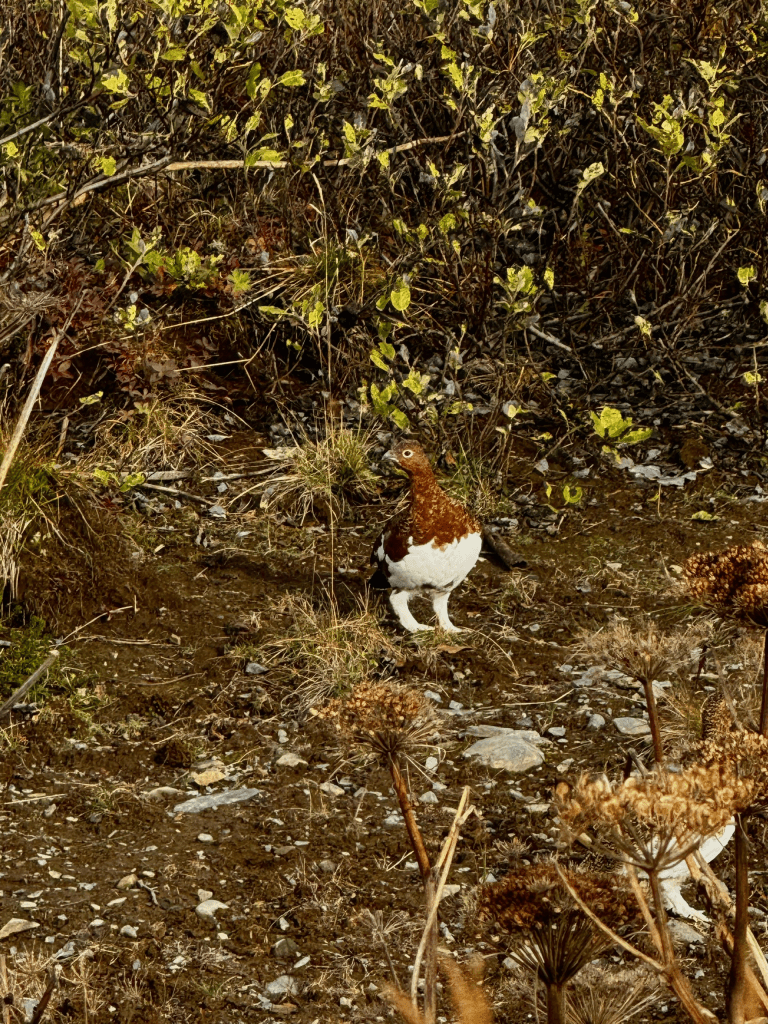
Coming back from the beach this morning, through tundra shrubs, there were ptarmigan.
So, I am finding that female Rock & Willow ptarmigan are tough to differentiate in some settings and times of year. Some of the differentiating characteristics are not evident in these little ones that I photographed below but based on what I am seeing and the habitat I am in, I am thinking these are Rock ptarmigan (Lagopus muta), but I am not 100% sure – might be Willow ptarmigan (Lagopus lagopus). The Rock ptarmigan has a narrower bill and smaller overall size than a Willow ptarmigan, but it’s kinda like a crow and a raven – sometimes hard to tell them apart without typical phenotypes side by side for comparison. In any case, they are beautiful and walk like chickens and have similar legs as chickens. They are quite cute to watch ambulating down the path.
Smaller than Willow ptarmigan, and bigger than the White-tailed ptarmigans, Rock ptarmigan develop winter plumage (turning to white) in mid-fall (early October) in northern and central AK and remain white until June. The males have a characteristic black mask extending from eye to bill in the wintertime, which contrasts their flashy red eyebrows and white plumage. Females lack a mask, with some having a partial black stripe fore and aft of their eyes. Males and females have white tipped tail feathers. Both are white in winter and turn to shades of brown plumage in summer months.
Rock ptarmigan are found throughout most of the beautiful state of Alaska, all the way from the Brooks Range in the northern portion of the state to Southeastern AK. Rock ptarmigan are the only Alaskan ptarmigan species in the Aleutian Islands. In one source I found, the Rock ptarmigan is only found on Kodiak Island, but this was conflicting in other sources that mentioned Willow ptarmigan are also here on Kodiak.
In Alaska, Rock ptarmigan are found in all treeless areas except for flat tundra in the extreme northern and western coasts. They nest in mostly treeless regions, and breed on hilly or mountainous tundra. They prefer small alpine and low herbaceous plants interspersed with rocky ridges and alpine valley. Rock ptarmigan tend to breed in higher, rockier, drier ground than Willow ptarmigan, and in winter months in open, shrubby habitat.
In winter months, Rock ptarmigan consume mainly insects and dwarf birch catkins shifting to buds and overwintered berries and catkins. In warmer months, when the bearberry, mountain aven and lousewort buds come to life, the first spiders that scurry across the snow incite the ptarmigans to shift their diets to these invertebrates. They are living off of plants and insects exclusively by mid-summer.
The Willow Ptarmigan is the official state bird of Alaska.
Fun fact – the town of Chicken, Alaska was named after the ptarmigan in 1902 when the town was incorporated, but no one could agree on the spelling of ptarmigan, so they named the town Chicken, AK instead. Ironically, back then the bird was considered a vital food source for miners in the last 1800’s…..and folks today describe them as tasting like chicken. This, coupled with their walk that mimics a chicken’s, it seems really appropriate!


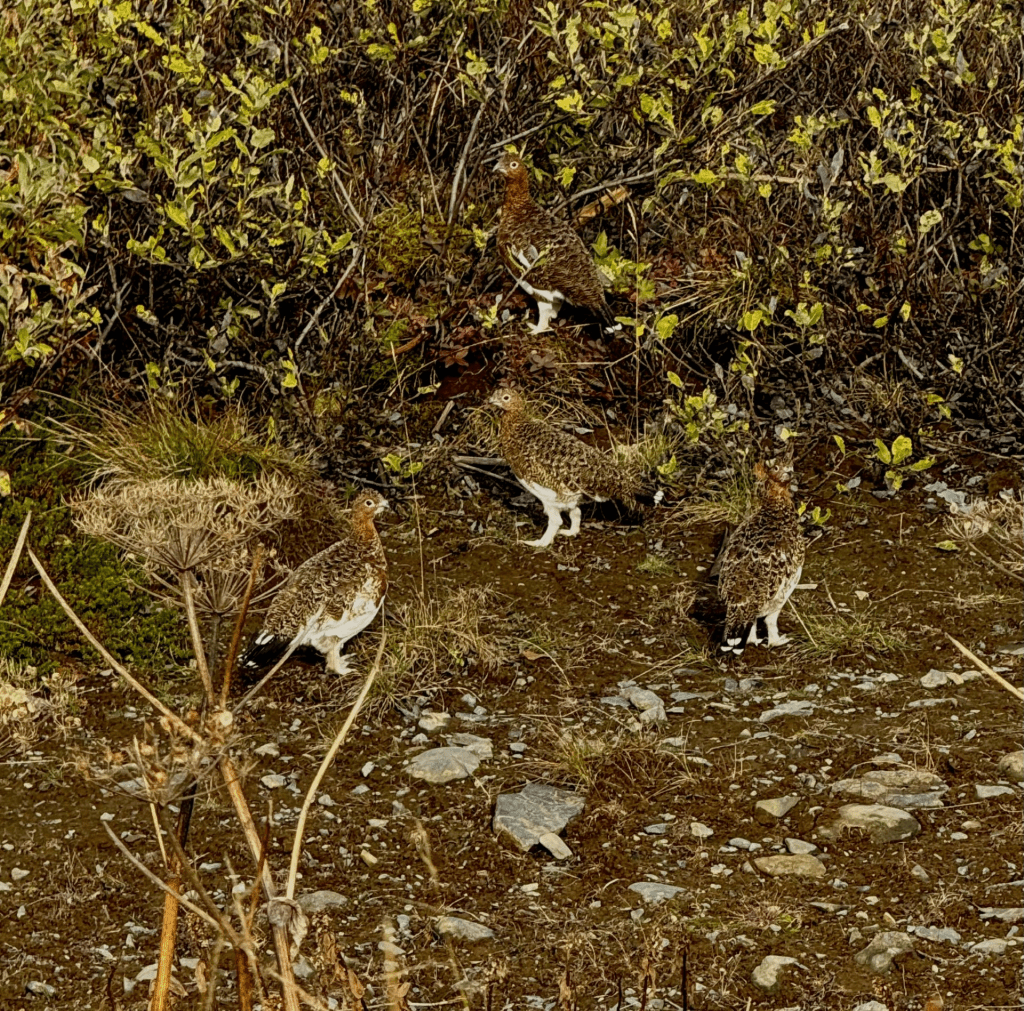
This is the habitat the above ptarmigan were in today. So vibrant and beautiful! As I walked across this, my feet sunk down a few inches in a spongy soft manner. There are wet pockets, but it was mostly dry. The green and red leaves are literally a spongy carpet over the ground.
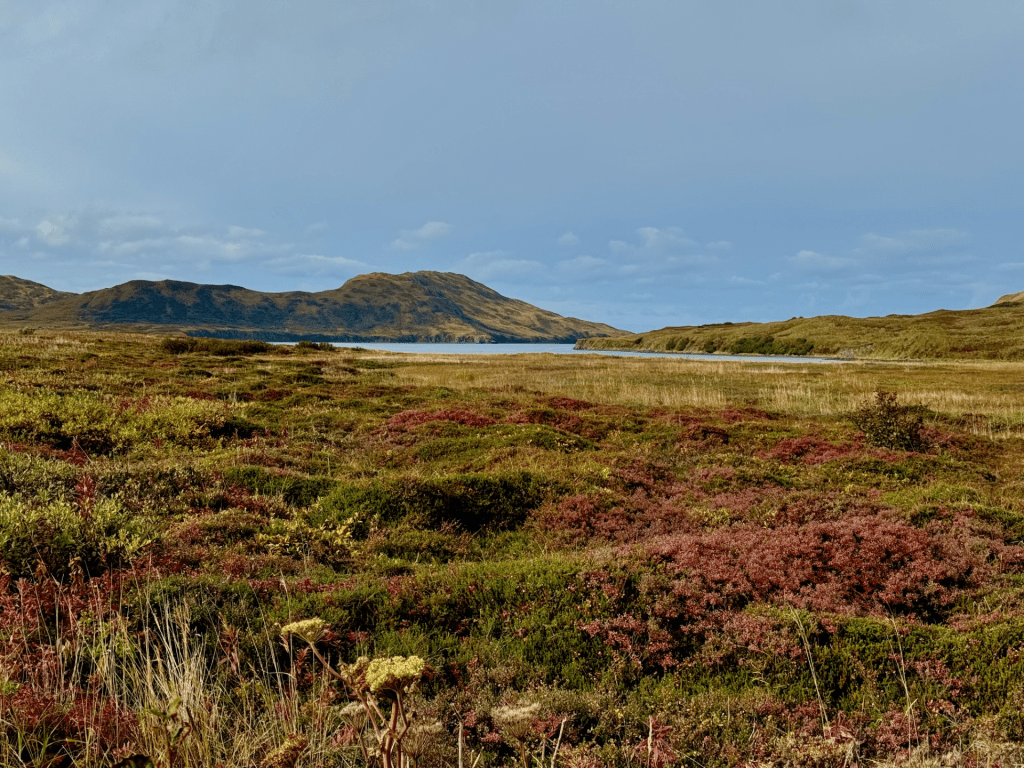
Crowberry with devils club and various other flora
Crowberry (called Augyaq in Alutiiq; scientific name Empetrum nigrum) is an evergreen shrub with soft needles and small bluish-purple flowers that eventually become edible, seedy berries. These really cool plants form “mats” in the bog, tundra and spruce forests and are found throughout the Kodiak archipelago. The berries ripen in late summer and early fall and are used in mashed potatoes, akutaq (ice cream) and also eaten with seafood (mostly fish). They are used in the usual foods that berries are traditionally used in such as jams and jellies. Also used to make purplish red dyes and, when burned, to fumigate for insects in homes of the Alutiiq peoples.
Medicinal and Spiritual uses in Alutiiq culture – teas made from the stems of crowberries are thought to facilitate menstruation (I am not clear on the rationale for this) and to cleanse homes (when burned) from illnesses, disease and evil spirits.
The next pic is NOT my photo – taken from the Alutiiq Museum website to illustrate the above text.

****
 jensnorthernexposure.com
Leave a comment