
The Sitka black-tailed deer

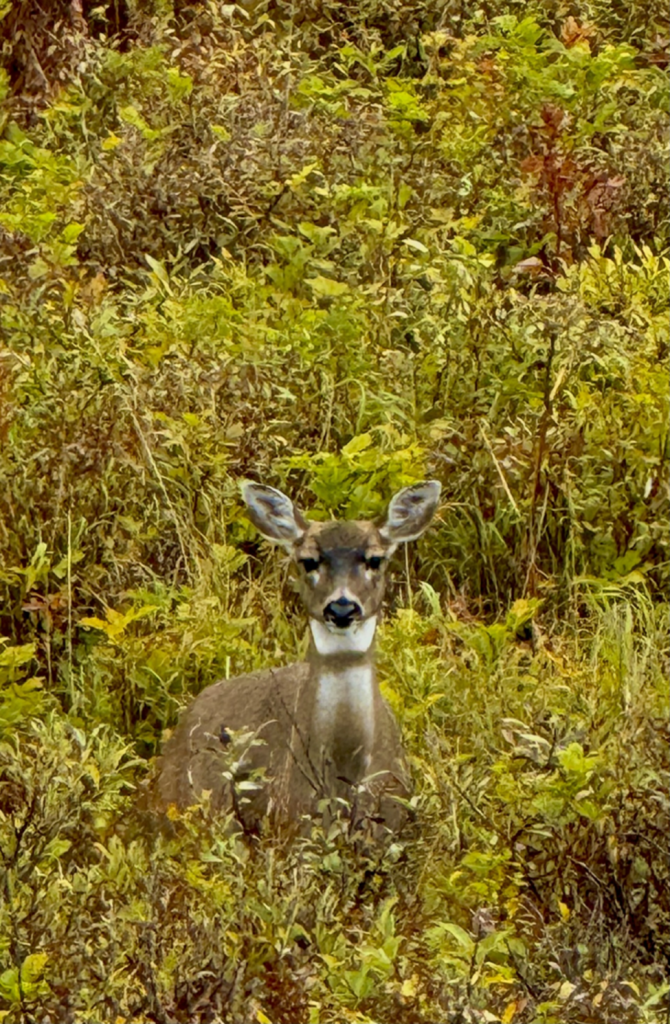
This little one watched me without moving a smidge for a long time!
Native to the wet coastal rainforests of British Columbia and Southeastern Alaska, the Sitka black-tailed deer (Odocoileus hemionus sitkensis) now has an expanded ranges with established populations on Kodiak and Afognak islands; Yakutat; and Prince William Sound. Although a subspecies of mule deer found in the lower 48, these little deer are smaller and stocker with an average weight of 80 pounds (does) to 120 pounds (bucks).
The Kodiak population of the Sitka blacked-tailed deer started with an initial population of 25 deer introduced on the north end of Kodiak Island from 1924 to 1933, with an additional 9 deer introduced in 1934. Since, their numbers have increased in population and range to the majority of the Kodiak archipelago. The population remains healthy despite their limited gene pool, which is remarkable! It is estimated that there are currently ~ 70,000 deer living on the Kodiak archipelago!
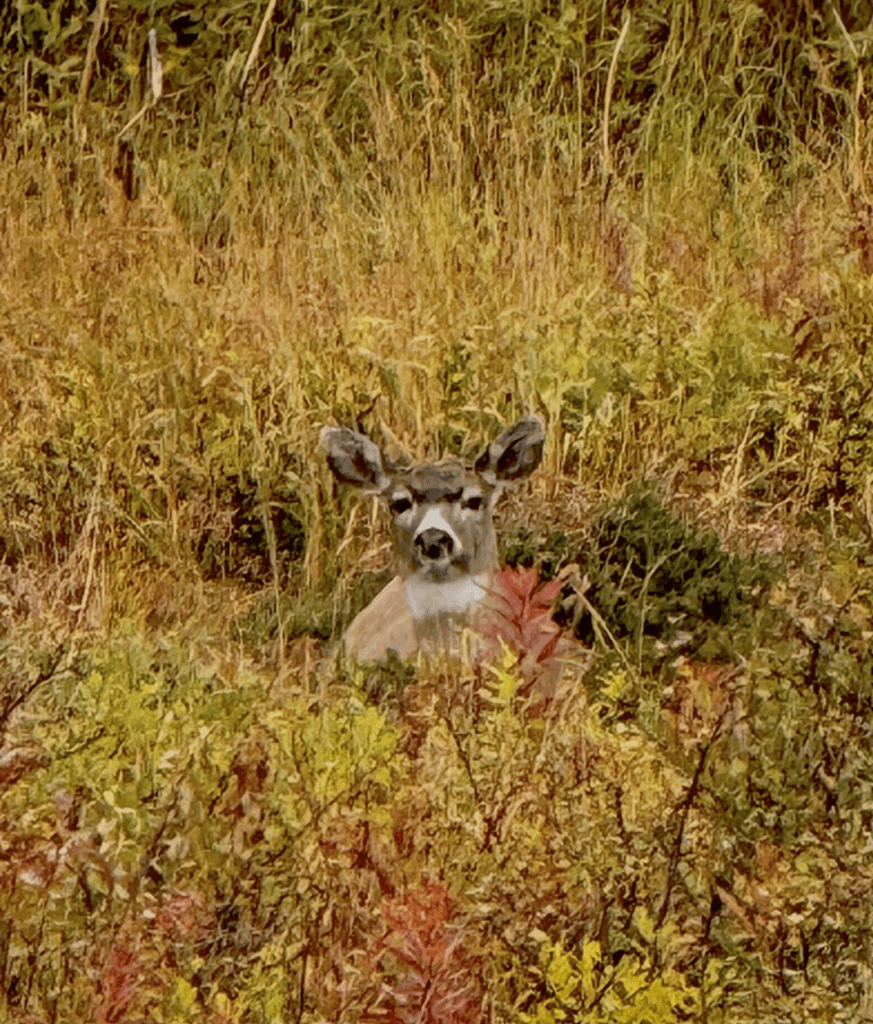
A second little one watching as still as the first
The Alaskan Sitka blacked-tailed deer populations remain dynamic, and winter’s severity governs this significantly. Severe winters result in major population declines, while milder winters result in population increases.
Likely because they are known to have meat sweeter and tastier secondary to the lack of sage brush in their diets, coupled with their small size, these are the most frequently pursued species of all the Alaskan big game.
Their home ranges vary from 30-1200 acres per individual with the average distance in winter and summer home ranges being a mere ½ mile to 5 miles. They tend to remain near the same watershed throughout the winter months. In winter months, snow depths influence deer distribution with regard to elevation with deer moving to lower elevations such as beaches and heavily timbered areas.
During the early spring and winter, these little deer mostly confound to old-growth forests <1,500 feet. Old growth forests provide prime winter habitat secondary to the high broken tree canopies intercepting snowfall while still allowing for adequate light to facilitate forage growth for their diets. In winter months, when snowfall is deep, they tend to feed on tree lichens, and the woody components of hemlock, blueberry and yellow cedar. When snow is not as deep, evergreen forbs and woody plants comprise the majority of their diets.
As Spring approaches, deer disperse, and by late Spring, they are already increasing their fat reserves that they lost during wintertime. Once summer arrives, they feed on herbaceous vegetation and shrub greenery.

****
Mountain Goat Flyby!

Taken en route to Akhiok just before the Konaig glacier region
Not a great pic, but wow! So high up and really large creatures! Just like the Sitka black-tailed deer, the Kodiak Mountain goat (Oreamnos americanus) is not native to Kodiak with their first transplant to the island in 1952 from the Kenai peninsula. Since, their populations have markedly increased, and they now cover most of the suitable habitat on Kodiak. The population began with 7 males and 11 females. Their population on Kodiak Island is now approximately 3,200 goats. Kodiak goats are similar in size to their relatives on the Kenai Peninsula; however, their movements into virgin habitats likely have contributed to increased growth rates.
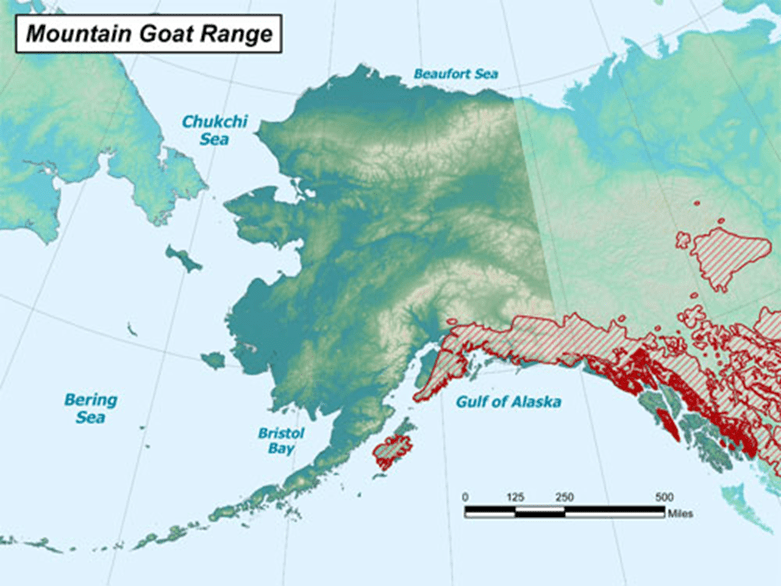
Mountain goat ranges are restricted to the broken and incredibly steep mountain ranges from Washington and Idaho to Southeastern and Southcentral Alaska. Their ranges extend from north and west along Cook Inlet coastal mountains, while in Southcentral Alaska, they thrive in the Wrangell and Chugach Mountains. In addition to being introduced to the Kodiak archipelago, they are also in the Revillagigedo and Baranof Islands of Southeastern Alaska.
These majestic creatures are both browsers and grazers and usually are found in high alpine meadows in the summer months where they feed on grasses, shrubs and herbs. They migrate to or below tree lines in winter, but some can remain on the steep windswept mountain ridges year-round. The steep terrain that they inhabit provides security from predators, and although getting within shooting range of these animals is possible, hunters must still negotiate the terrain to claim their kill.
Interestingly, both the males and females have horns. Males average 260 pounds, while females average 180 pounds.
If my pic was not blurry, you could see that this is what they look like. Credit for this pic is The AK Dept of Fish & Game and NOT my photo:


 jensnorthernexposure.com
Leave a comment